Cleaning jobs in Japan offer steady work and clear pay ranges, making them a common choice for foreigners.
You will find different rates depending on the job type, location, and shift.
This guide gives you a simple breakdown of what to expect before applying.
Overview of Cleaning Jobs in Japan
Cleaning jobs in Japan cover many workplaces and shift types. You will see consistent routines, clear expectations, and stable demand across the industry.
- Cleaning roles include hotels, office buildings, schools, hospitals, and private homes.
- Most jobs offer part-time hours, but full-time contracts exist in larger companies.
- Shifts start early in the morning, run through the day, or operate late at night, depending on the facility.
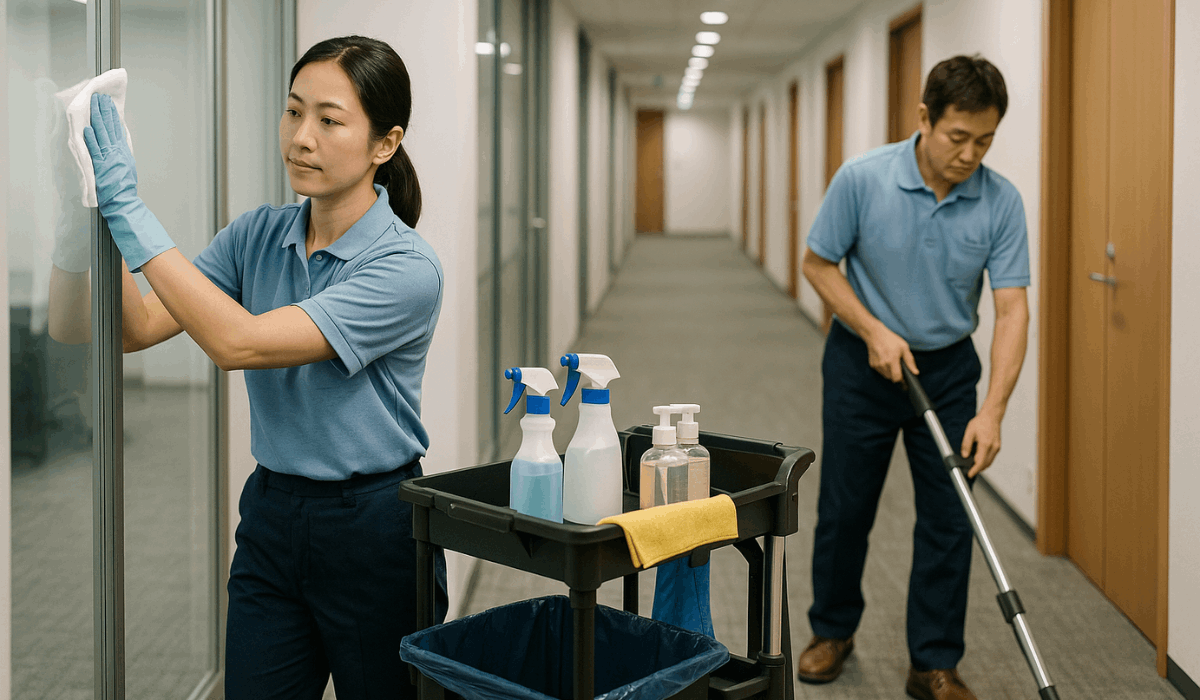
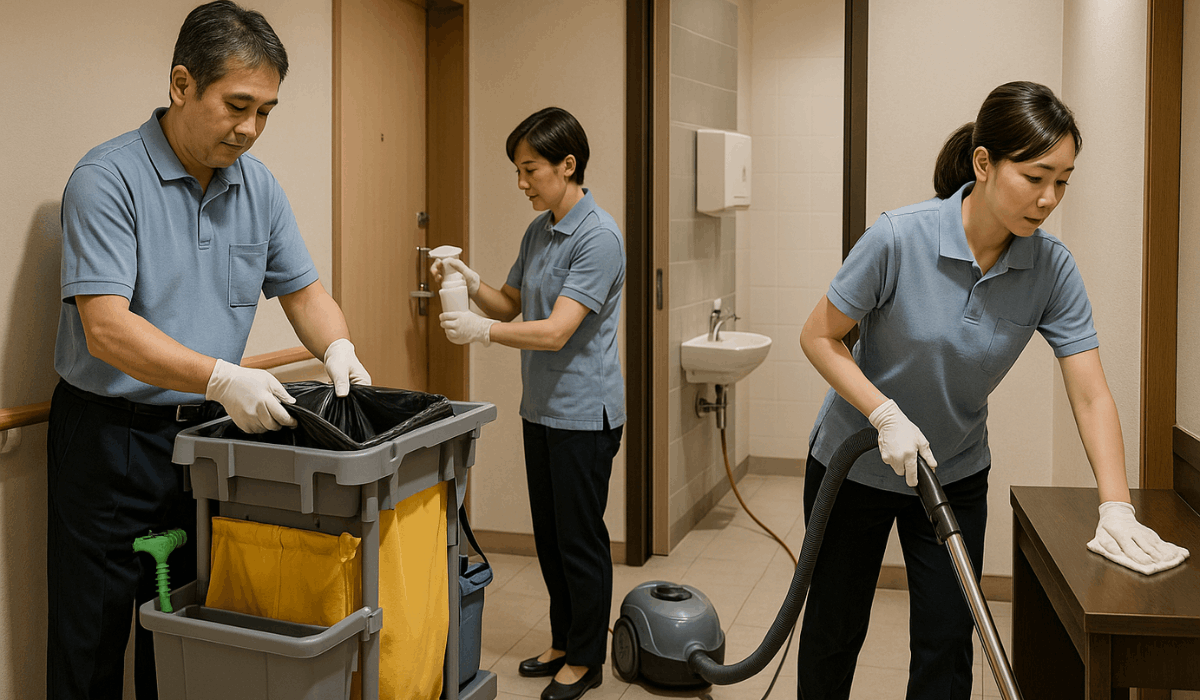
- Tasks include sweeping, wiping down surfaces, sanitizing restrooms, vacuuming, and collecting trash.
- Workplaces provide basic tools such as mops, carts, disinfectants, and protective gloves.
- Many employers hire beginners and offer short training sessions to teach proper cleaning steps.
Salary Guide by Job Type
Cleaning salaries in Japan depend on the workplace, region, and shift. You can compare each job type to find the role that fits your income goals.
- Hotel Cleaners: Around ¥1,422 per hour or ¥2,957,131 per year on average.
- General Housekeeping / Facility Cleaners: About ¥1,229 per hour or ¥2,556,952 per year.
- Standard Cleaners (All Sectors): Average pay is ¥1,896,700 per year, with a range from ¥931,700 to ¥2,964,800.
- Tokyo Area Cleaners: Higher pay, averaging ¥2,065,400 per year due to the cost of living.
- Night-Shift Cleaners: Usually receive 10%–25% higher pay depending on employer policy.
- Residential Cleaners (Agency-Based): Often paid ¥1,100–¥1,400 per hour, with some agencies offering monthly bonuses.
Required Skills and Qualifications
Cleaning jobs in Japan do not require complex training. You only need simple skills and the ability to follow routines.
- Basic physical strength for lifting, bending, and standing for long periods
- Ability to follow cleaning steps and workplace instructions
- Basic Japanese for simple tasks; some jobs accept minimal language skills
- Good attention to detail when cleaning rooms, restrooms, and common areas
- Punctuality and reliability, which employers value highly
- Willingness to learn through short on-site training sessions
Work Conditions and Expectations
Cleaning jobs in Japan follow predictable routines and set rules. You will work with basic tools and follow workplace standards.
- Uniforms: Standard clothing provided by the employer to keep you clean and identifiable.
- Safety Gear: Items like gloves and masks are used to protect you during cleaning tasks.
- Tasks: Daily cleaning, including wiping surfaces, sanitizing restrooms, and removing trash.
- Work Pace: The speed you must follow to finish each area within the set time.
- Breaks: Scheduled rest times based on your shift length.
- Teamwork: Working with other cleaners when assigned to group tasks.
- Supervision: Routine checks by a supervisor to ensure your work meets cleaning standards.
Benefits and Bonuses
Many employers offer simple benefits to support your daily work. You can expect basic allowances and added pay in specific situations.
- Transportation Allowance: Extra pay to cover part of your commute cost.
- Overtime Pay: A Higher hourly rate when you work beyond your scheduled hours.
- Night-Shift Bonus: Extra income for late-night or early-morning shifts.
- Social Insurance: Health and pension coverage for full-time workers.
- Paid Leave: Vacation days and sick leave, depending on your contract.
- Seasonal Bonuses: Small bonuses given by some companies during major holidays.
Pros and Cons
This kind of job has strengths and drawbacks you should be aware of. Seeing both sides helps you understand what the work is really like.
Pros:
- Steady Demand: Positions are always available in many cities.
- Simple Entry Requirements: Many employers hire beginners with no experience.
- Flexible Shifts: Part-time, early-morning, and night options are common.
- Quick Training: You learn the tasks in a short time.
Cons:
- Physical Workload: Tasks involve lifting, bending, and long hours on your feet.
- Limited Career Growth: Promotion opportunities are fewer compared to other fields.
- Shift-Based Schedules: Early mornings or late nights may be required.
- Repetitive Tasks: Daily routines rarely change.
How to Apply for Cleaning Jobs in Japan
You can apply through several easy methods. Most employers accept beginners and respond quickly.
- Job Portals: Search on major websites like Indeed Japan or Hello Work.
- Direct Applications: Visit hotels, offices, or cleaning companies and submit your resume in person.
- Staffing Agencies: Register with dispatch agencies that place workers in cleaning positions.
- Company Websites: Some large firms list open positions on their official career pages.
- Convenience Store Job Boards: Local listings are often posted near the counter or entrance.
- Required Documents: Bring your resume (rirekisho), residence card, and proof of visa status.
Visa Requirements for Workers
You must have the right visa to work legally in Japan. The rules depend on your status, so you need to check what your current visa allows.
- Student Visa: You can work up to 28 hours per week with a permit called Shikakugai Katsudō Kyoka (Permission to Work).
- Dependent Visa: You can work part-time only if you apply for the same work permit used by students.
- Specified Skilled Worker (SSW) Visa – Type 1: Allows full-time work in cleaning and building maintenance companies.
- Working Holiday Visa: Lets you work part-time or full-time with flexible conditions, depending on your home country’s agreement.
- Permanent Resident or Long-Term Resident Visa: You can work in any field without restrictions.
- Tourist Visa: You cannot work under any condition.
Training Duration
Training for cleaning work is short and easy to follow. You learn the basic steps before starting your regular shifts.
- 1–3 Days Basic Training: Covers simple tasks like sweeping, wiping, vacuuming, and trash handling.
- On-the-Job Practice: You follow a senior worker for a day to learn the routine for your assigned area.
- Safety Instruction (1 Hour): Includes rules for chemicals, tools, and restroom sanitation.
- Hotel Cleaning Orientation: Usually 2–4 days, focusing on room turnover and bed-making standards.
- Building or Office Cleaner Training: Often 1–2 days, teaching hallway, lobby, and restroom routines.
- Periodic Refreshers: Some employers give short monthly updates to maintain quality.
Workplace Culture
Workplaces in Japan follow quiet, organized, and polite routines. You are expected to match the team’s pace and habits.
- Punctuality: Arriving on time is essential and shows respect to your team.
- Politeness: Workers greet each other with simple phrases like “ohayou gozaimasu” or “otsukaresama desu.”
- Quiet Work Style: Cleaning staff keep noise low, especially in hotels and offices.
- Team Cooperation: You help coworkers when needed and follow group instructions.
- Clean Appearance: Uniforms must be neat, and personal hygiene is part of workplace expectations.
- Following Procedures: Staff stick to the assigned routine and avoid skipping steps.
Health and Safety Rules
Health and safety rules help you avoid injuries and keep the workplace clean. You need to follow these guidelines every day.
- Use Protective Gear: Wear gloves, a mask, and an apron when handling chemicals or trash.
- Follow Chemical Labels: Use cleaning liquids as instructed to avoid skin or breathing problems.
- Proper Waste Handling: Separate regular trash from sharp or hazardous items.
- Avoid Wet-Floor Risks: Post warning signs on slippery areas to prevent slips and falls.
- Lift Safely: Bend your knees when lifting heavy trash bags or equipment.
- Handwashing: Wash your hands after cleaning restrooms or touching waste.
- Tool Storage: Return mops, brooms, and chemicals to their designated storage areas to prevent accidents.
Final Advice
Cleaning jobs in Japan offer steady demand, simple requirements, and clear routines that help you plan your work life.
Take time to compare openings in your area, as pay and schedules can vary across employers.
Start applying today and move closer to getting the job that fits your goals.